
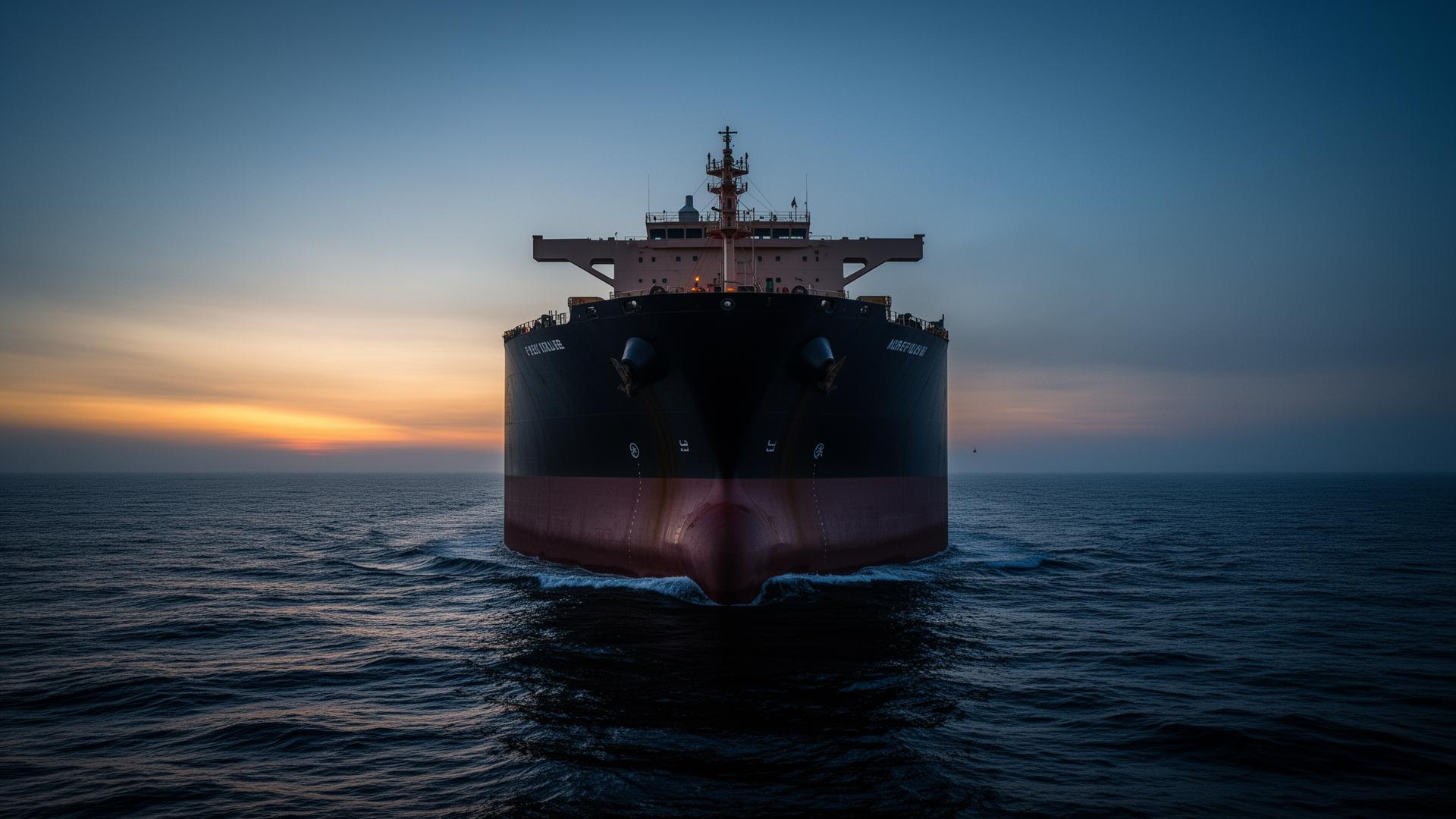
Tanker at sea
Institutional Maritime Advisory

Superior risk-adjusted returns in tanker and dry bulk markets.

Maritime consulting for institutional investors and shipowners across Tankers and Dry Bulk Carriers. As specialist shipping consultants, we execute vessel acquisitions, structure complex financings, and optimize portfolios with rigorous DCF analysis, charter forecasting, and market intelligence.

01 — Capabilities

Disciplined execution across the tanker and dry bulk investment lifecycle.

Three interlocking practices, one continuous mandate: deploy capital with conviction, structure it with precision, and validate every decision with quantitative rigor.

Vessel Acquisition

Proprietary sourcing and valuation across tankers (MR2, LR2, Aframax, Suezmax, VLCC) and dry bulk (Handysize, Handymax, Ultramax, Kamsarmax, Capesize). Full-cycle negotiation and institutional-grade due diligence.

Structured Finance

Sale-leasebacks, senior debt, mezzanine, and hybrid solutions. Tailored to optimize capital structure and covenant packages across wet and dry segments.

Investment Analysis

Comprehensive DCF modeling, tanker and dry bulk freight forecasting (BDI, ConTex, SCFI), sensitivity analysis, and residual value optimization across the cycle.

02 — Approach

Rigorous analysis. Institutional execution. Deep market expertise.

Every engagement is shaped by the same conviction: tanker and dry bulk markets reward those who pair quantitative discipline with experienced judgment.

Tankers
MR2 · LR2 · Aframax · Suezmax · VLCC
Full wet segment coverage
Dry Bulk
Handysize · Handymax · Ultramax · Kamsarmax · Capesize
Full dry segment coverage
DCF
Proprietary
Cycle-tested modeling
360°
Lifecycle
Acquisition to exit
03 — Insights

Market themes we are watching.

Key themes in tanker and dry bulk fundamentals, capital flows, and trading dynamics — tracked by the desk for mandate clients and strategic discussions.

Freight RatesQ3 2026

Summer lull gives way to a firmer autumn setup

Crude tanker earnings softened through the seasonal Q3 trough, but VLCC and Suezmax fixtures are already rebuilding on the back of Atlantic Basin liftings and pre-winter refinery runs. Products are holding better than the wet crude curve, with MR2 and LR2 supported by long-haul arbitrage flows. Dry bulk has been the steadier performer: Capesize has led on iron ore and bauxite volumes, while Kamsarmax and Ultramax have found a floor on grain season cargo. We read the current levels as a base rather than a peak into Q4.

Red Sea / HormuzQ3 2026

Routing decisions have hardened into structural tonne-mile

Owner behaviour around the Red Sea has settled into a two-tier market — a cohort transiting on higher war-risk cover, and a cohort routing Cape of Good Hope as standing policy. Either way, the tonne-mile absorption is now baked into fleet productivity rather than treated as a temporary distortion. Hormuz remains the tail risk that matters most: any disruption there repices VLCC availability within days. We treat corridor normalisation, not escalation, as the underappreciated downside scenario.

Supply / DemandQ3 2026

Delivery wave approaches while the existing fleet ages

Yard slots booked through the 2023-25 ordering cycle begin arriving in volume from 2027-28, but near-term deliverable supply stays constrained. Meanwhile a large share of the tanker fleet is past 15 years, sanctioned and shadow-fleet tonnage is progressively excluded from mainstream trades, and CII-driven speed discipline continues to shave effective capacity. For dry bulk the orderbook remains modest relative to fleet size. The balance still favours owners, but the window narrows as the delivery curve steepens.

Quarterly briefings · Bespoke desk notes on request
04 — Engage

Engage with Vectra.

Direct line to principal. Confidential, mandate-driven conversations.

Founder & Principal
Dimitris Filippas